




Every year, valuable items get broken simply because they weren’t packed properly, often failing basic transit standards used across the packaging industry, such as those set by the International Safe Transit Association..
A scratched lens, a dented controller, or a cracked collectable. Most of these come from one issue. Packaging.
Whether you’re transporting goods yourself or just storing something of value in a warehouse, protective foam inserts offer a fantastic solution.
What Are Protective Foam Inserts?
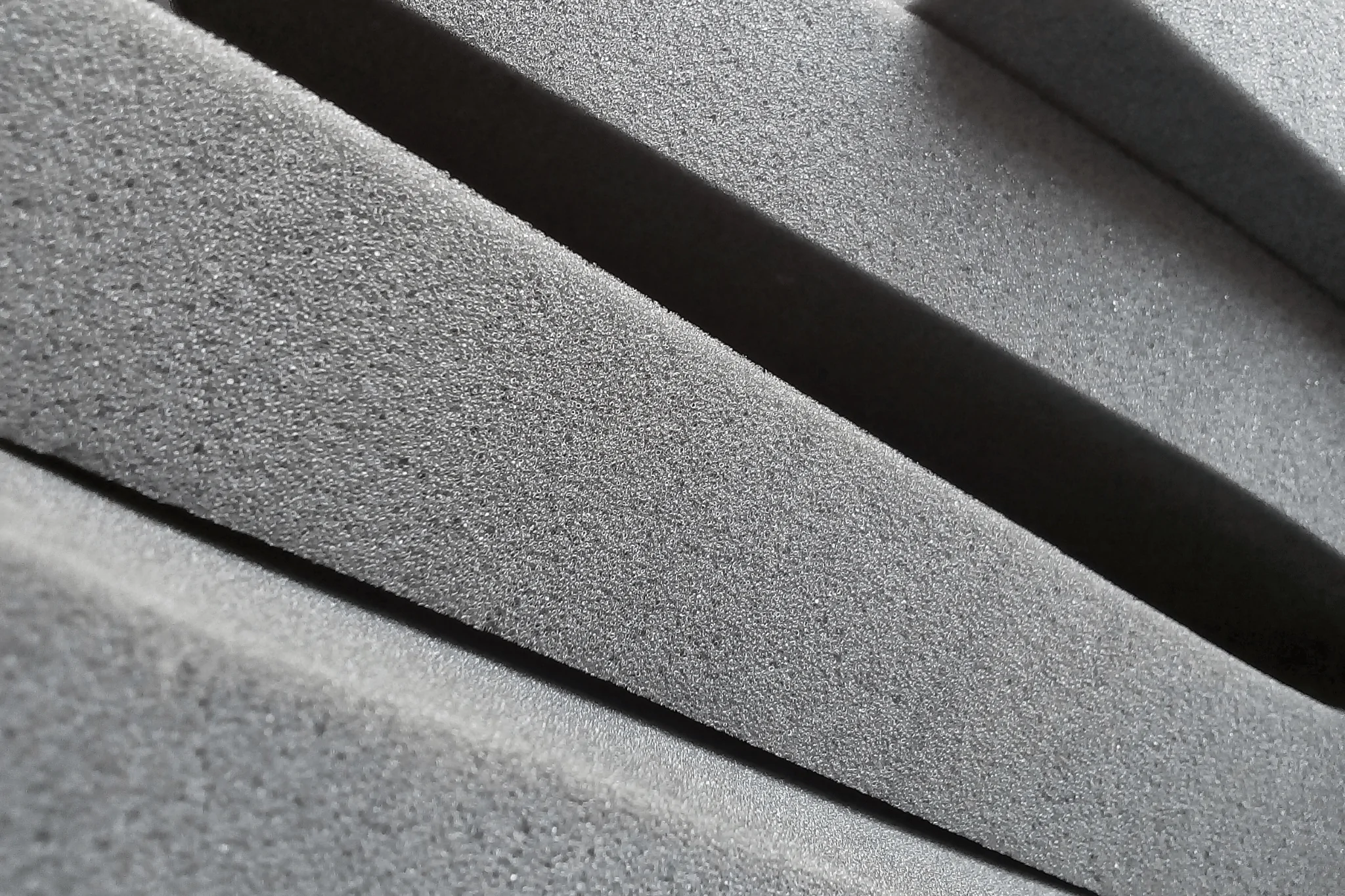
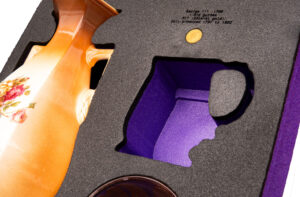
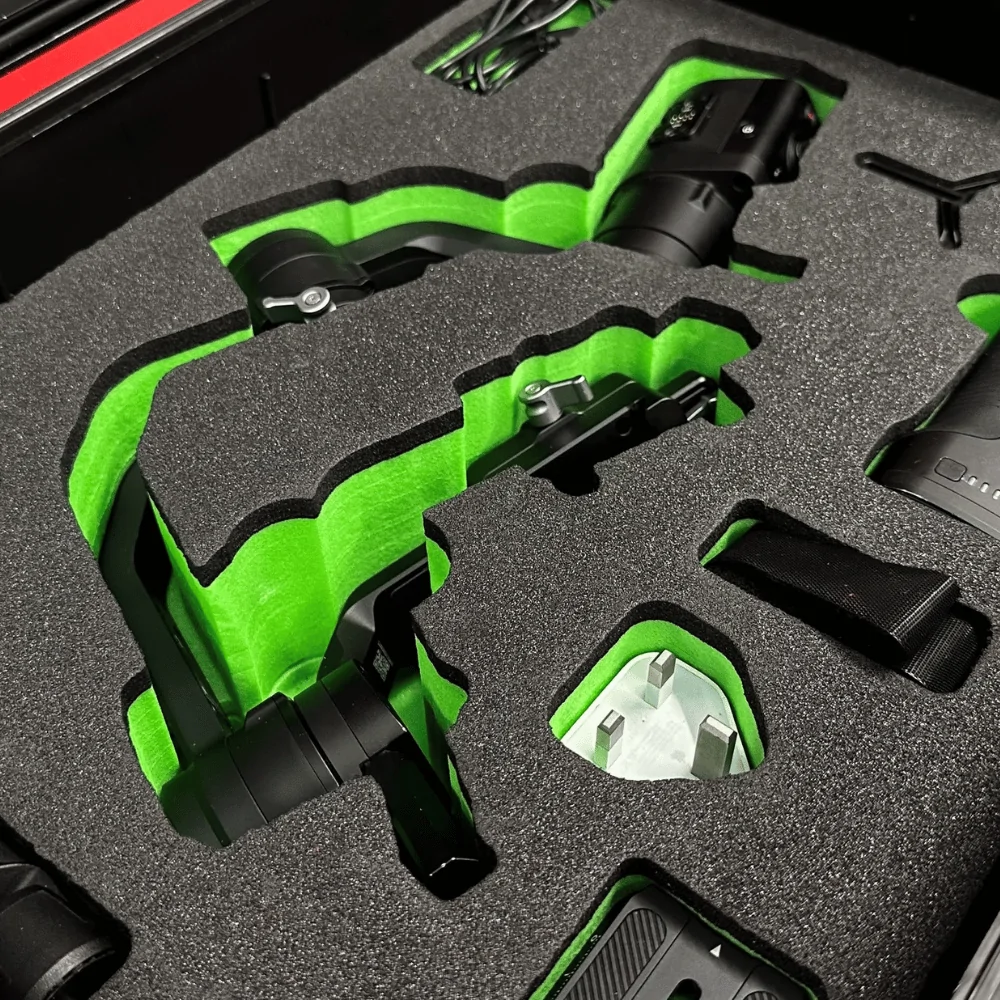
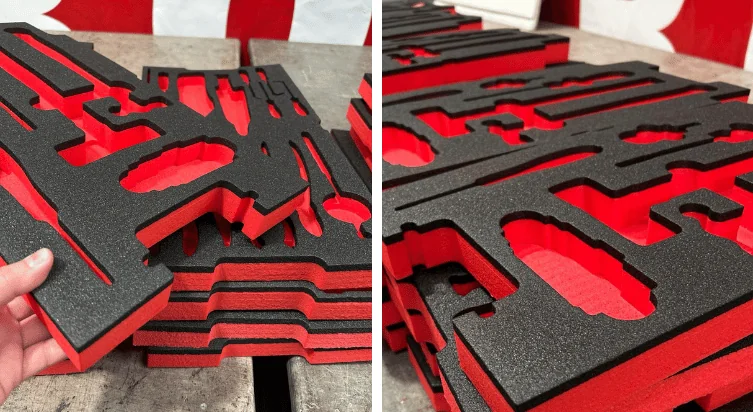
Protective foam inserts are CNC-cut foam pieces that lie inside cases, boxes, and packaging. They are designed around the goods and act as a bespoke cushion to help absorb impact and to stop movement, preventing damage during storage or transportation.
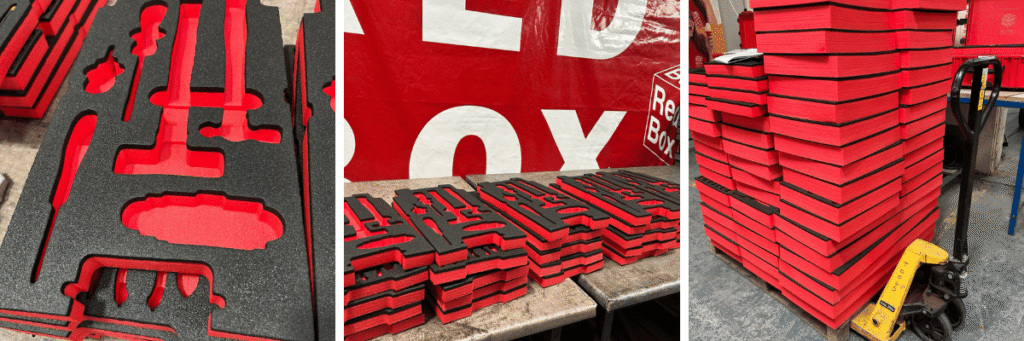
Why Protective Foam Inserts Are Important
Foam inserts for protection can:
- Prevent Impact Damage: The foam inlay naturally absorbs shock when the external storage is dropped or knocked, reducing the risk of internal damage.
- Keep Items Secure: A snug cushion-like fit stops the stored goods from shifting inside the storage unit, preventing wear and unnecessary collisions.
- Protect Against Scratches: Soft foam surfaces don’t scratch delicate finishes, screens, or lenses, making them ideal for storing camera equipment or crafts.
- Improve Organisation: When every item you store or transport has a dedicated place in the foam inlay, you see what’s missing at a glance.
Where Are Custom Foam Inserts Used?
Custom case inserts can be used for many applications:
- Film equipment
- Gun storage
- Crafts & collectibles
- Electronics and audio gear
- Medical instruments
- Industrial components
- Display cases
Standard vs Custom Foam Inserts
Feature | Standard Foam Inserts | Custom Foam Inserts for Cases |
|---|---|---|
Shape
| Pre-cut and non-custom
| Specifically for your item
|
Fit | Often loose
| Perfect fit
|
Protection
| Basic or none
| Excellent
|
Finish
| Okay
| Professional
|
Durability
| Wears and flakes faster | Last long
|
Presentation | Generic | Premium
|
Best for | Affordability
| Protecting high-value goods
|
What Makes a Good Protective Insert?
What makes foam inserts for equipment “good” comes down to a few essentials:
- High-density foam, like polyurethane or polyethene
- Durable material that can withstand repeated use
- Accurate CNC cutting for a clean, snug finish
- Thickness that’s suited to the item’s weight
Foam Inserts for Storage vs Transport
Storage and transportation place different demands on packaging foam inserts.
For storage, organisation and dust protection matter the most. Foam inserts provide this by being used as an inlay inside a storage container (dust protection) and by being custom-made for a specific good or set of goods (organisation).
Transportation, on the other hand, shifts the priority to impact resistance and stability. Packaging foam inserts allow for this by using snug high-density foam that reduces movement and provides a shock absorption layer.
When Should You Upgrade to Custom Foam Inserts?
Custom protective foam inserts are recommended for:
- Items that are high-value or fragile
- Equipment that is transported frequently
- Items that need to be presented well
- Replacing old foam that’s worn out
If you’re unsure whether foam inserts are recommended for your application, feel free to contact our team at Red Box Foam.
FAQs
What foam is best for protecting items?
High-density polyurethane or polyethene is good as it balances cushioning and durability.
Are foam inserts good for shipping?
Yes. Impact and vibration are among the leading causes of in-transit damage. Protective foam inserts reduce this by offering a soft cushion and shock-absorption layer.
Do foam inserts prevent damage?
They reduce it massively by absorbing impact and preventing movement.
Can foam inserts be customised?
Yes. They can be CNC cut to fit the exact measurements of your goods and the size of your storage container.